- Home
-
-
A beginner's guide to the characteristics and usage of wax materials

If you’ve read my last post, you already know why choosing the right wax material is a make-or-break factor for candle-making—and we even dipped our toes into the basic types of wax out there.
But many of you reached out asking for more details: What exactly makes one wax glossy while another holds scent better? How do I adjust my process based on the wax I pick?
Today, we’re diving deep into the heart of the matter—breaking down the key characteristics of common waxes and walking through how to use each one effectively, so you can turn that “which wax?” confusion into confident candle-making.
Soy wax
Characteristics
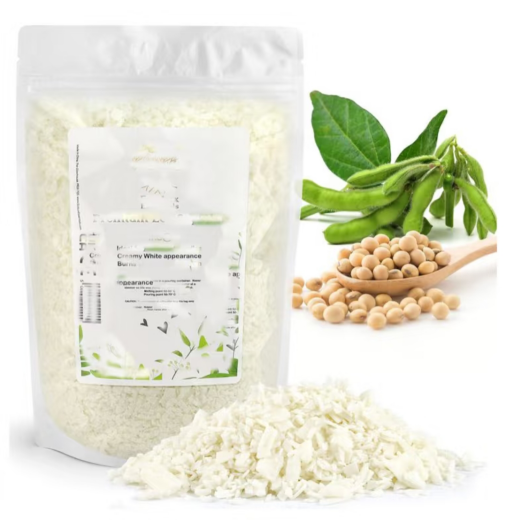
Derived from refined natural soybean oil, soy wax has become a popular choice for scented candle making, thanks to its eco-friendly, renewable, and healthy characteristics. It contains no harmful substances, burns without smoke or toxicity, and achieves complete combustion—minimizing waste and pollution. Additionally, soy wax has a fine, smooth texture that is easy to shape and process, opening up more possibilities for your scented candle creations.
Technical Parameters:
Melting Point: Relatively low, usually between 30°C and 40°C, making it easy to melt with heating.
Casting Temperature: It is recommended to be slightly higher than the melting point to ensure the wax can flow fully and fill the mold when poured into it.
Essential Oil Ratio: For soy wax, the recommended addition ratio of aromatic essential oil is 6% to 10%, which ensures sufficient aroma release and achieves the ideal aromatherapy effect.
Manufacturing Advantages:
Eco-friendly & Healthy: As a natural and renewable material, soy wax contains no harmful substances, ensuring safe and healthy use.
Easy to Process: With a fine texture, soy wax is easy to melt, mix and shape, making it suitable for various scented candle-making techniques.
Good Ductility: When melted, soy wax boasts excellent ductility—it can be easily poured into molds and forms a smooth surface.
Long-lasting Aroma: When mixed with aromatic essential oils, soy wax releases fragrance persistently, adding a touch of warmth and romance to your home life.
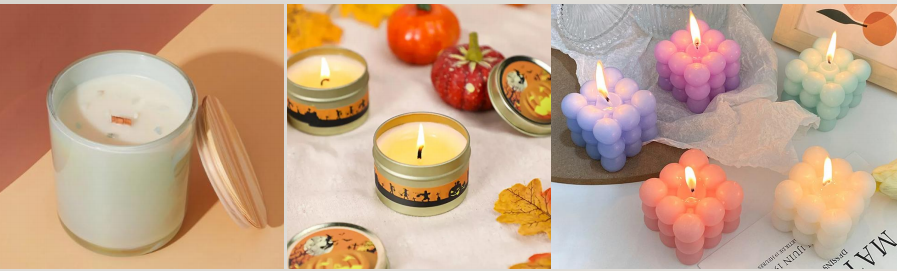
Suitable For:Jar Scented Candle,Tin Candle,Mold Candle
2. Paraffin wax
Introduction:
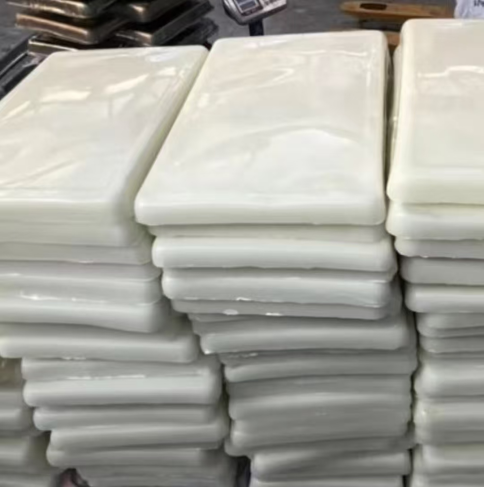
Paraffin wax, especially the 58°C fully refined paraffin wax, is one of the most commonly used materials in scented candle making. Derived from the lubricating oil fractions obtained through petroleum distillation, it is produced via solvent refining, solvent dewaxing or wax freeze crystallization, followed by deoiling—resulting in a flaky or acicular crystal form. Based on the degree of processing and refinement, paraffin wax can be categorized into fully refined, semi-refined, and crude paraffin wax, among which fully refined paraffin wax has the highest transparency.
Technical Parameters:
Melting Point: 58°C, which is moderate and easy to handle.
Casting Temperature: 100°C is recommended to ensure the wax is fully melted and evenly distributed.
Essential Oil Ratio: It is recommended to add 3% to 4% of aromatic essential oil to 100g of paraffin wax for the best aroma effect.
Characteristics
Fully refined paraffin wax has high transparency, making the finished candles more crystal clear under light. In addition, paraffin wax also boasts excellent stability and plasticity, which makes it suitable for making candles of various shapes, such as stick candles and columnar candles. Meanwhile, it can also be mixed with other wax materials to create more diverse candle products.
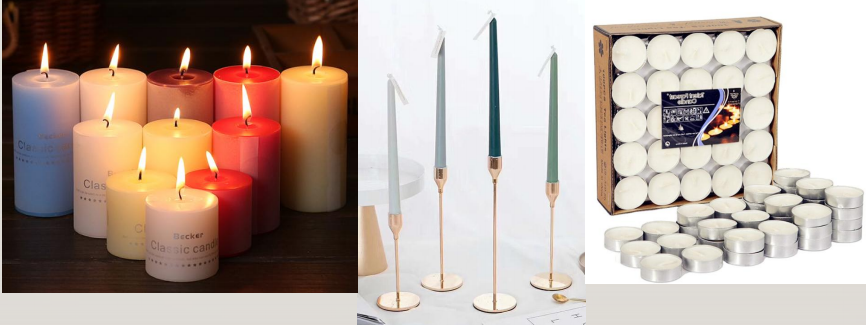
Suitable For: Pillar candle,taper candle,tea light candle
3.Palm Wax
Characteristics
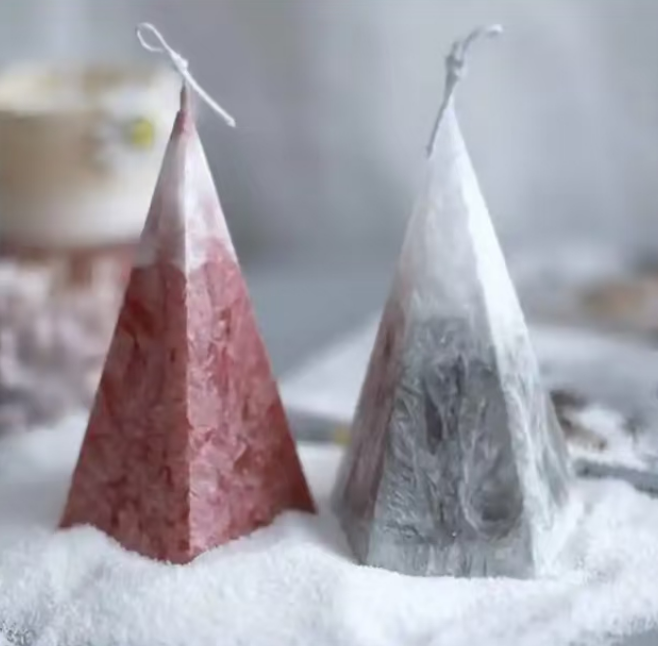
Ice wax is extracted from coconut meat. Its unique feature is that when it comes into contact with air, a snowflake-like ice-crack pattern will naturally form on its surface. Compared with small-pattern ice wax, large-pattern ice wax has more spectacular patterns. This wax material is not only elegant in appearance, but also has many advantages such as being less prone to cracking, not easy to separate from the container, good burning performance, and eco-friendly with no smoke.
Technical Parameters:
Melting Point: 56°C - 58°C, which is moderate and easy to handle.
Casting Temperature: 110°C is recommended to ensure the wax is fully melted and evenly distributed.
Essential Oil Ratio: It is recommended to add 3% - 4% of aromatic essential oil to 100g of ice wax for the best aroma effect.
Application Scenarios:
Ice wax is ideal for making container candles and mold candles. Its unique ice-crack texture adds a touch of nature and mystery to the finished products. Whether used for home use or as a gift, it can showcase extraordinary taste.
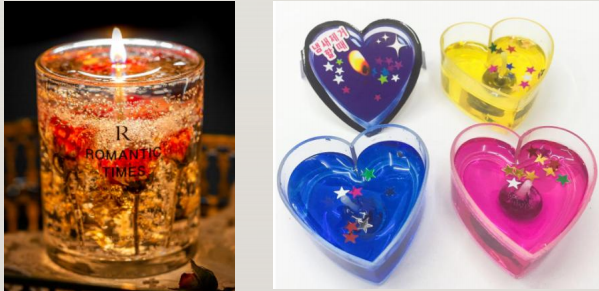
Suitable For:Brilliant pillar candles, or any candle with a clear glass container
Conclusion
And that wraps up our breakdown of three go-to waxes—soy wax, paraffin wax, and palm wax—from their key traits to technical specs and practical uses. Whether you’re leaning into soy’s eco-friendly edge, paraffin’s clarity, or palm’s versatility, these basics should set you up for your first candle-making tries.
Stay tuned for the next post, where we’ll dive into more common wax types to expand your candle-making toolkit!
Thank you for your reading and support.