- Home
-
-
What Is A Wax Melter And How It Works In Candle Production
Views: 0 Author: Site Editor Publish Time: 2026-05-31 Origin: Site


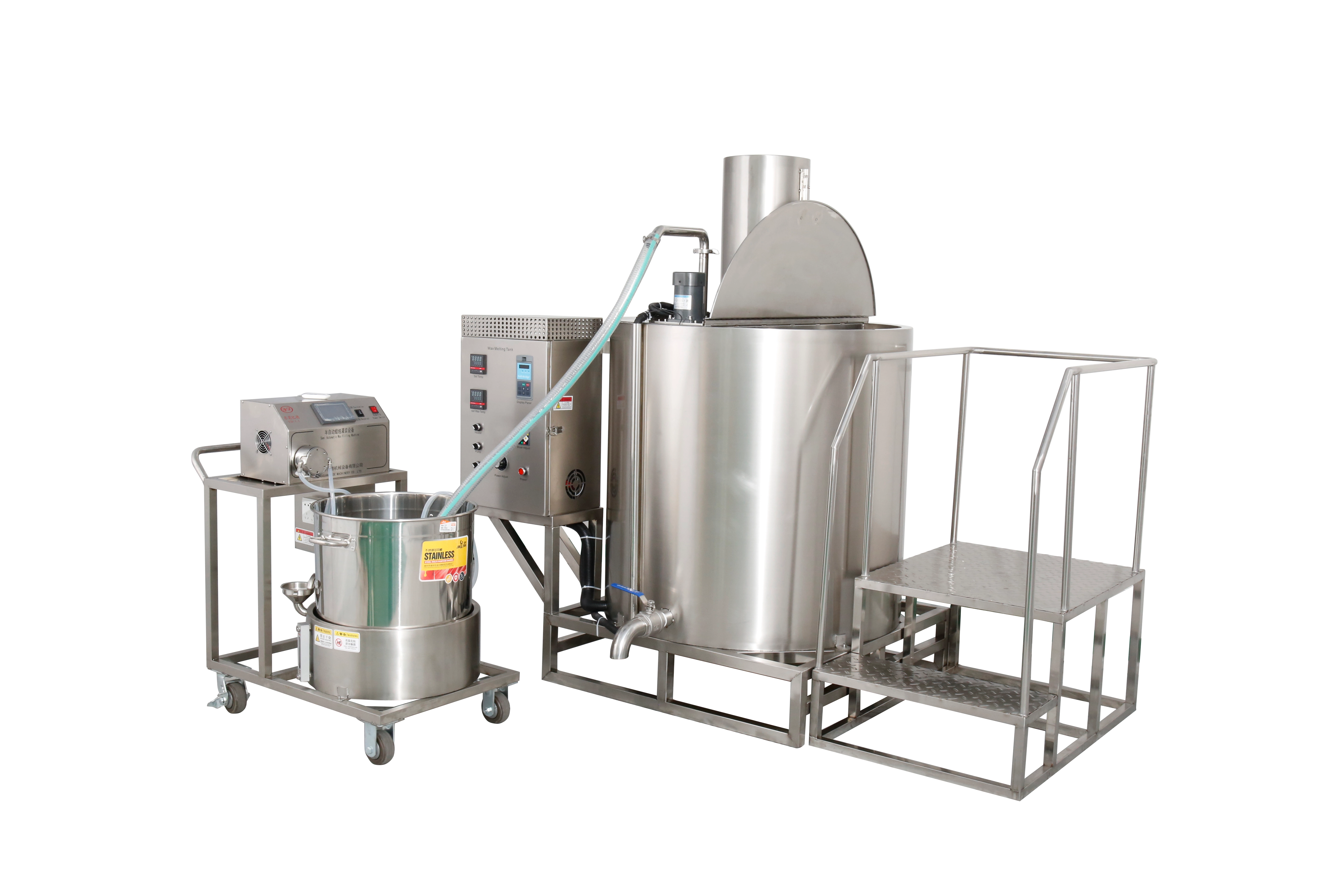
Scaling a candle business often exposes a critical operational bottleneck. You eventually must transition from inconsistent, small-batch methods like kitchen double boilers to standardized commercial equipment. This shift marks the difference between a hobby and a reliable manufacturing process. We define a Wax Melter as a purpose-built system designed to safely liquefy materials at highly controlled temperatures. It maintains optimal viscosity throughout the day and actively prevents material degradation. Without one, you risk scorched batches and severely limited growth potential.
Our objective here is to break down the exact mechanics behind these machines. We will assess various technological variations available on the market today. Finally, we provide a concrete framework to help you evaluate the perfect equipment for your exact scale. You will discover exactly how to optimize your workflow and increase your daily output.
Key Takeaways
Dedicated wax melters stabilize candle production by providing precise temperature control, reducing the risk of scorched wax and inconsistent scent throws.
Heating methodology (direct vs. water-jacketed indirect) dictates the equipment's suitability for different wax blends and production volumes.
Upgrading to an industrial wax tank requires assessing facility electrical capacity, workflow ergonomics, and long-term throughput goals.
Prioritizing safety features, such as enclosed heating elements and emergency shut-offs, is non-negotiable when handling large volumes of combustible materials.
The Core Mechanics of Commercial Wax Melting
Understanding how commercial equipment functions is crucial for optimizing your manufacturing line. The core mechanics dictate how quickly you can process raw materials. They also determine the final quality of your poured products.
The Heating System
Manufacturers utilize three primary methods to transfer thermal energy inside the chamber. Base-plate systems position heating elements directly beneath the floor of the vessel. They heat the bottom layer first, requiring manual agitation to distribute warmth evenly. Wrap-around heating bands encircle the exterior walls of the tank. They offer a larger surface area for heat transfer, which speeds up the initial melt. Water-jacketed systems work entirely differently. They utilize a double-walled construction filled with a fluid bath. The heating elements warm the fluid, which then surrounds the inner chamber. This method transfers thermal energy gently and evenly across all interior surfaces.
Thermostatic Control
Integrated thermostats act as the brain of your equipment. They constantly monitor internal temperatures to prevent accidental overheating. Consistent wax melting requires strict thermal boundaries. If temperatures spike too high, you risk reaching the material's flash point. Overheating also burns off volatile fragrance oils prematurely. This ruins your cold and hot scent throws. Advanced digital thermostats allow you to lock in specific temperature ranges. They cycle the heating elements on and off automatically. This maintains a steady state without constant manual monitoring.
Dispensing Mechanisms
The pour valve, or spigot, determines your dispensing efficiency. Unheated brass valves are common on entry-level units. However, they rapidly lose heat when exposed to ambient room temperatures. This causes material to solidify inside the channel and clog the flow. Heated pour valves solve this issue entirely. They feature internal micro-heaters to keep the dispensing pathway completely clear. Stainless steel valves offer superior durability over brass. They resist corrosion from aggressive fragrance oils and handle high-volume pouring smoothly. A well-engineered dispensing mechanism drastically reduces physical fatigue during continuous pour sessions.
Direct vs. Indirect Heating: Evaluating Your Options
Selecting the right heating method forms the foundation of your production strategy. You must match the equipment capability to your specific material requirements.
Direct Heat Melters
Direct heat systems are straightforward and highly efficient. Heating elements apply heat directly to the vessel walls or base. This direct contact transfers energy rapidly.
How it works: Electrical elements sit in direct contact with the exterior of the internal tank. They push heat straight through the metal wall.
Evaluation: These units heat up significantly faster than alternative designs. They generally cost less to purchase. We find them best suited for smaller batches or hardy paraffin blends less sensitive to rapid temperature fluctuations.
Risks: They carry a higher potential for localized hot spots. You must stir the contents frequently to prevent bottom layers from scorching.
Indirect Heat (Water-Jacketed) Melters
Indirect systems prioritize gentle, uniform heating over raw speed. They mimic traditional double boilers on a massive commercial scale.
How it works: A heated water bath completely surrounds the internal chamber. The fluid acts as an insulated thermal buffer between the element and your product.
Evaluation: This design delivers exceptionally even heat distribution. It eliminates hot spots entirely. It remains ideal for delicate natural blends like soy or coconut. Intense direct heat easily damages the fragile molecular structure of these natural materials.
Risks: These machines are substantially heavier when filled. You must actively monitor water levels to prevent the jacket from boiling dry. They also take much longer to reach the initial target temperature.
Heating System Comparison Chart
Feature
Direct Heat Systems
Indirect (Water-Jacketed) Systems
Heat-up Speed
Fast (30-60 minutes typically)
Slow (1-3 hours depending on volume)
Temperature Distribution
Prone to hot spots without stirring
Highly uniform and gentle
Best Suited For
Paraffin, beeswax, hard waxes
Soy, coconut, delicate natural blends
Maintenance Needs
Low (no fluids to monitor)
Moderate (requires water level checks)
Upgrading to an Industrial Wax Tank: Sizing and Scalability
Moving from a tabletop unit to floor-standing equipment requires careful planning. You cannot simply purchase the largest machine available and expect immediate success. Scaling up forces you to rethink your entire physical workspace.
Defining Success Criteria
You must calculate your required tank capacity based on strict daily pour targets. Analyze your current curing times and cooling rack availability. A massive industrial wax tank serves no purpose if your cooling racks only hold fifty jars. Determine how many pounds you process in an eight-hour shift. Factor in the melt time. A 100-pound tank might require two hours to liquefy completely. If you need 300 pounds per day, you must plan for three separate melt cycles. Right-sizing your equipment prevents costly idle time and maximizes daily throughput.
Facility and Infrastructure Requirements
Commercial equipment pulls serious electrical amperage. Standard residential outlets rarely support heavy-duty machinery. Assess your facility's power draw capabilities carefully. Many large units require dedicated 220V circuits to function correctly. Plugging a massive heating element into a standard 110V circuit will repeatedly trip your breakers. Furthermore, you must measure the physical footprint required. Allow extra space around the machine for safe operation and proper ventilation. Heat dissipation matters in enclosed workshops.
Ergonomics and Workflow Integration
Worker fatigue destroys manufacturing efficiency. You must evaluate the valve height clearance before purchasing. Does the spigot easily clear your tallest pouring pitchers? If the valve sits too low, you will spend hours bending over awkwardly. Consider the ease of loading solid raw blocks. Lifting 50-pound slabs into a chest-high tank risks back injuries. Efficient candle production relies on smooth, ergonomic workflows. Evaluate the physical labor required for continuous daily operation. Small ergonomic improvements yield massive productivity gains over a full year.
Implementation Risks and Production Safety
Commercial manufacturing introduces severe industrial hazards. Handling hundreds of pounds of molten combustible material requires strict operational protocols. Neglecting safety features invites catastrophic facility damage.
Managing Flash Points
Every raw material features a specific flash point. This is the temperature at which it emits vapors capable of igniting in air. You must understand the critical importance of keeping temperatures strictly below this threshold. A runaway thermostat creates an immediate fire hazard. Proper equipment utilizes redundant thermal limiters to cut power before reaching dangerous levels. Prioritizing safety prevents devastating workshop fires. Never leave active heating elements completely unmonitored for extended periods.
Material Durability and Chemical Resistance
The interior material of your tank matters immensely. Food-grade stainless steel interiors serve as the industry standard for several reasons. First, stainless steel completely prevents rust formation. Second, it aggressively resists corrosion from highly concentrated fragrance oils. Aluminum tanks often pit and degrade when exposed to acidic essential oils over time. Stainless steel also eases sanitation between scent changes. A smooth steel surface wipes down cleanly, ensuring your new batches remain uncontaminated by previous runs.
Maintenance and Cross-Contamination
A poorly maintained machine ruins product quality. You must develop standard operating procedures for daily maintenance.
Clearing valves: Always clear clogged valves while the machine remains warm. Use a specialized heat gun to gently melt blockages. Never force tools into a cold valve.
Draining residuals: Drain the tank completely at the end of your shift. Residual pools degrade overnight and discolor fresh batches the next morning.
Cleaning the tank: Wipe down the warm interior walls with paper towels and rubbing alcohol. This strips away lingering fragrance molecules and guarantees batch purity.
Building Your Shortlist: The Purchase Decision Framework
Navigating the equipment market requires a structured evaluation method. You must separate essential manufacturing features from clever marketing gimmicks.
Cost vs. Value Output
Do not simply look at the initial price tag. Analyze the return on investment through tangible production metrics. Calculate the exact labor hours saved per week. A larger machine might eliminate three hours of manual melting time daily. Multiply those saved hours by your hourly labor rate. Additionally, factor in the reduction of defective products. Precise temperature control eliminates frosted jars and poor scent throws. Fewer discarded batches directly increase your monthly profit margins.
Feature Prioritization
Create a non-negotiable list of features before contacting suppliers. Determine exactly what your process demands to succeed.
Controller Type: Decide between precise digital controllers and basic analog dials. Digital controllers offer exact degree accuracy, while analog dials only provide broad ranges.
Valve Construction: Demand heated stainless steel valves if you pour continuously. Unheated valves cause frustrating bottlenecks.
Insulation Quality: Look for heavy lid insulation. Proper insulation traps thermal energy inside, speeds up melting times, and lowers your monthly electricity bills.
Sloped Bottoms: Seek out tanks featuring internally sloped floors. They funnel every last drop of liquid toward the valve, minimizing wasteful residue.
Vendor Trust and Support
Commercial machinery occasionally breaks down under heavy use. Evaluating manufacturer warranties is an absolute necessity. Determine the immediate availability of replacement parts like heating elements or pour valves. If a proprietary heating band fails in November, you cannot afford to wait six weeks for international shipping. Assess their customer service reputation specifically for commercial equipment. Reliable B2B vendors offer dedicated technical support lines to help troubleshoot electrical issues quickly.
Conclusion
The right equipment fundamentally transforms candle making from a labor-intensive craft into a predictable manufacturing process. You gain complete control over your production schedule when you eliminate manual temperature monitoring. Consistent heat application guarantees superior product quality and drastically reduces expensive material waste.
We strongly recommend taking a baseline measurement of your current production bottlenecks. Track your exact melting time versus your active pouring time over a full week. This data reveals exactly how much capacity you truly need. Buying blindly often leads to undersized or completely oversized machinery.
Take action on your business growth today. Review your daily production data and evaluate your facility's electrical capacity. Finally, reach out to your shortlisted manufacturers and request detailed technical spec sheets. Upgrading your equipment is the single most effective step toward scaling your brand sustainably.
FAQ
Q: How long does a commercial wax melter take to heat up?
A: Heat-up times vary significantly based on capacity and heating type. A small 10-pound direct-heat unit can liquefy contents in 30 to 45 minutes. Conversely, large 100-pound water-jacketed tanks often require 2 to 3 hours to reach target temperatures safely.
Q: Can I leave wax in the melter overnight?
A: It is generally not recommended. Leaving it heated overnight wastes energy and poses unnecessary fire risks. Prolonged heat exposure also degrades the material structure and burns off essential properties. Always turn off the machine and drain it properly.
Q: What is the best way to unclog a wax melter valve?
A: The safest method involves using a standard heat gun. Gently apply warm air directly to the exterior of the brass or stainless steel valve. Wait for the internal blockage to liquefy and flow out. Never jab sharp tools inside.
Q: Is an industrial wax tank suitable for mixing fragrance oils?
A: No. You should melt bulk unscented material in the main tank. Dispense the liquid into separate pouring pitchers, and then add your specific fragrance oils. Mixing directly in the primary tank severely contaminates the interior, making future scent changes incredibly difficult.