Views: 0 Author: Site Editor Publish Time: 2026-09-07 Origin: Site


Hand-pouring candles often starts as a beautiful hallmark of true craftsmanship. However, this manual approach eventually transforms into a severe operational bottleneck as your orders multiply. Growing brands quickly realize human hands can only pour so fast before fatigue sets in. Upgrading your facility is not just about increasing raw speed. It is fundamentally about improving your unit economics, ensuring batch-to-batch product consistency, and maximizing floor-space utilization. You need highly reliable systems to protect your profit margins and meet strict retail demands on time.
This article provides a grounded, ROI-focused framework for operations managers and business owners. We will help you evaluate if you are truly ready for a major capital investment in factory mechanization. You will learn how to identify critical volume thresholds, select the right machinery for your recipes, and plan a seamless factory rollout without disrupting your current sales.
Manual production becomes mathematically inefficient when waste, labor costs, and rejected units outpace equipment financing costs.
An automatic candle production line requires facility upgrades (power, ventilation, spatial layout) alongside the machinery purchase.
Choosing between a semi-automated wax filling line and a fully automated conveyor ecosystem depends entirely on SKU variety and volume consistency.
Successful implementation requires a phased rollout to maintain current order fulfillment during equipment calibration.
Recognizing the right time to upgrade requires a brutally honest look at your current output limits. Many factory managers wait too long to evaluate their processes. They ignore the warning signs until a major wholesale contract falls through. Let us examine the precise indicators showing your manual pouring operations are failing.
Every facility hits a specific monthly output number where manual pouring breaks down completely. For many boutique brands, this ceiling hovers around 5,000 to 10,000 units per month. You might notice your team struggling to fulfill large wholesale orders on time. Spikes in direct-to-consumer (DTC) sales during the holiday season often trigger massive fulfillment delays. When you constantly rely on costly overtime hours just to meet basic baseline demand, your volume has officially outgrown your manual infrastructure.
Simply adding more human pourers eventually creates severe diminishing returns. Factory floors have spatial limits. You cannot fit twenty workers into a room designed for ten without causing logistical chaos. Furthermore, human bodies suffer from physical fatigue. A worker pouring their first fifty jars will maintain excellent accuracy. By jar five hundred, their pour weights will fluctuate wildly. Spatial crowding leads to safety hazards, accidental spills, and slower overall movement across the production floor.
Manual processes inherently invite costly micro-inconsistencies into your final product. These tiny errors compound into massive financial losses over a fiscal year. Consider the common quality control issues plaguing hand-poured lines. Off-center wicks ruin the burn profile of your product. Variable wax pouring temperatures cause unsightly sinkholes or poor glass adhesion. These defects force your team to melt down rejected units or sell them at steep discounts. Relying on human precision for temperature-sensitive chemical processes is an unwinnable battle at scale.
Investing in new infrastructure requires rigorous financial justification. You must look beyond the initial sticker price of the hardware. The true return on investment becomes clear when you analyze labor shifts, material yields, and newfound revenue potential.
The most immediate financial impact comes from restructuring your payroll. A manual setup might require ten workers to handle wicking, pouring, and labeling. Upgrading your floor allows you to shift away from this heavy headcount. Instead, you employ one or two skilled technicians managing your candle manufacturing equipment. You significantly reduce payroll taxes, benefits, and shift-scheduling headaches. The system does the heavy lifting, while your technicians focus entirely on monitoring readouts and quality assurance.
Wasted materials eat directly into your net profit margin. Human pourers inevitably spill wax. They often over-pour into jars to avoid under-filling, which gives away expensive fragrance oil for free. Precision dosing changes this dynamic entirely. Automated nozzles dispense exact gram weights into every single vessel. This strict volumetric control drastically reduces over-pouring and wax spillage. Maximizing your fragrance oil yield is critical because scent formulations are usually the most expensive raw material in your inventory.
Many owners fail to calculate the invisible cost of doing nothing. What happens when a major national retailer asks you to supply 50,000 units for a seasonal launch? If your manual team cannot handle the load, you must decline the contract. This revenue loss is the ultimate opportunity cost of inaction. Scaling your capacity means you can confidently bid on high-volume retail contracts. You transform your factory from a reactive fulfillment center into a proactive growth engine.
You must establish transparent assumptions regarding capital expenditures (CapEx) and operational expenditures (OpEx). The initial machine purchase represents a significant CapEx. However, this hardware depreciates predictably over its useful life. Meanwhile, your OpEx changes shape. Variable manual labor costs decrease, while predictable maintenance and utility costs emerge. Most modern facilities calculate projected payback periods showing full ROI within 18 to 36 months. Production automation stabilizes your operational budget, making long-term financial forecasting much more accurate.
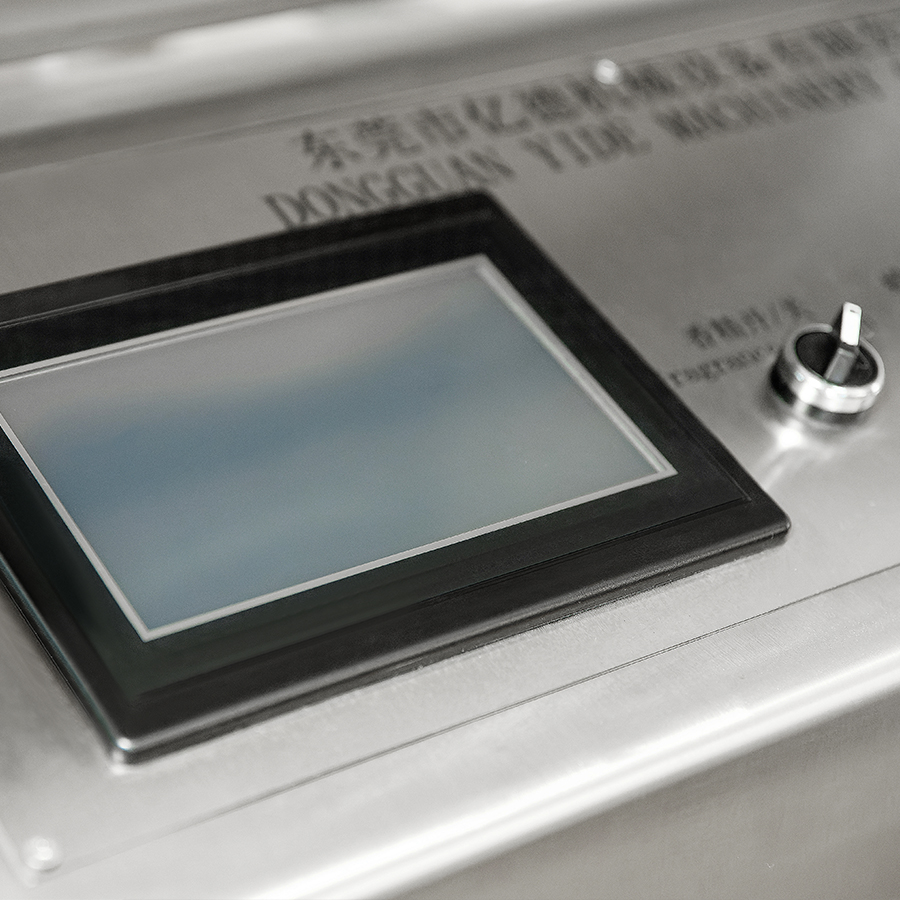
You do not have to jump straight from hand-pouring pitchers to massive robotic factories. The market offers scalable solutions tailored to specific business models. Your choice depends entirely on your product catalog and batch sizes.
A semi-automated setup acts as an excellent bridge for growing brands. This tier typically involves heated mixing tanks paired with single or dual-nozzle manual-trigger pump systems. Operators still physically move the jars, but the machine handles the heating and dispensing.
Best for: Brands with high SKU variation, medium batch sizes, and limited floor space.
Equipment profile: Gravity-fed or gear-pump heated tanks requiring an operator to trigger each pour via a foot pedal or handheld wand.
Benefits: This approach offers a lower barrier to entry. It allows incredibly quick changeovers between different wax types or fragrances. You spend less time purging lines and more time adapting to varied daily orders.
When you transition to fulfilling major retail contracts, semi-automation is no longer sufficient. You need an overarching ecosystem designed for relentless, uninterrupted throughput. A fully automatic candle production line removes nearly all manual handling from the equation.
Best for: High-volume, low-SKU repetition. Think of massive runs where you produce 20,000 identical vanilla jars over a weekend.
Equipment profile: These ecosystems feature synchronized conveyor belts, robotic auto-wicking stations, and multi-head volumetric wax filling lines. They integrate forced cooling tunnels to accelerate setting times and inline labeling machines for final packaging.
Benefits: You achieve maximum throughput with minimal human intervention. The yield becomes highly predictable. You know exactly how many units will roll off the belt every single hour, allowing for flawless logistics planning.
Review the breakdown below to understand the operational differences between system tiers.
Feature | Semi-Automated System | Fully Automated Ecosystem |
|---|---|---|
Operator Involvement | High (Manually moves and aligns jars) | Low (Monitors readouts, loads raw materials) |
Changeover Speed | Fast (Easy to flush and switch scents) | Slow (Requires line purging and recalibration) |
Hourly Throughput | Medium (Depends on operator speed) | Very High (Mechanically fixed rate) |
Space Requirement | Minimal (Fits in small commercial spaces) | Extensive (Requires linear factory layouts) |
Buying industrial hardware is not like buying a household appliance. You must scrutinize the engineering capabilities of the equipment against your specific recipes. Failing to align machine specs with your proprietary formulations will result in disastrous manufacturing delays.
Different wax blends behave uniquely under heat. Soy wax, beeswax, and paraffin have vastly different melting points and viscosity curves. You must assess how the machine manages these thermal properties. An exceptional candle making machine utilizes water-jacketed or oil-jacketed heating systems. These systems maintain consistent, gentle heat through the entire pathway, right down to the dispensing nozzles. If the nozzles drop in temperature, the wax will crystallize and cause severe clogging. Verify the system can sustain the exact thermal parameters your specific blend requires.
Downtime is your biggest enemy in a mechanized factory. You must calculate the exact time required to perform a changeover. When switching from an 8-ounce lavender tin to a 16-ounce sandalwood jar, the line must stop. How long does it take to purge the hoses, clean the holding tanks, and recalibrate the fill volumes? If a changeover takes three hours, running small, diverse batches will destroy your daily productivity. Look for modular nozzle designs and easy-drain tank systems to optimize this agility.
Never purchase hardware without mapping it precisely against your existing factory layout. Long conveyor systems require significant linear square footage. Measure your ceiling heights to ensure gravity-fed hoppers fit comfortably. Consider the turning radius of your forklifts around the loading zones. The machine must integrate smoothly into your material flow, from raw wax delivery to finished pallet storage.
Hardware breaks. Pumps fail. Sensors drift. When this happens, vendor support becomes your lifeline. Evaluate the manufacturer strictly on their post-sale infrastructure. Ensure their machinery carries proper CE or UL certifications to satisfy your commercial insurance policies. Ask direct questions about the availability of spare parts. If a specialized valve breaks, you cannot afford to wait six weeks for overseas shipping. Demand responsive technical support and accessible maintenance manuals before signing any purchase order.
Many business owners gloss over the physical realities of installing heavy machinery. Plugging in a new line is rarely a simple, one-day event. You must prepare your building and your staff for a complex transition period.
Industrial machinery draws immense power. You will likely need an electrician to install three-phase power drops directly to the machine footprint. Furthermore, melting thousands of pounds of wax generates intense ambient heat. You must upgrade your HVAC systems to handle these massive cooling loads. If your room temperature spikes, your forced cooling tunnels will fail to set the wax properly. Additionally, pneumatic pumps and auto-wicking stations rely heavily on compressed air availability. You must install industrial-grade air compressors and route secure airlines to the operating zones.
Do not expect flawless products on day one. The first few weeks of operation represent a necessary calibration phase. Operators must learn to program exact pour rates, synchronize conveyor speeds, and fine-tune cooling tunnel temperatures. Acknowledge that you will experience trial, error, and wasted material during this window. You must budget for these initial losses. Treat the calibration phase as an intensive training period for your floor technicians.
Tearing out old benches to install new hardware creates immense workflow disruption. You cannot stop shipping orders just because you are upgrading your facility. Develop strict strategies for maintaining legacy production in parallel. Consider operating a skeleton night shift for manual pouring while contractors install the new framework during the day. Protect your shipping deadlines fiercely to maintain retailer trust during the transition.
Moving from the research phase to actual procurement requires organized, documented steps. You must build a highly specific procurement profile to share with equipment manufacturers.
Begin with a tape measure. Document precise dimensions of your available production zones. Note the exact locations of utility drops, water lines, and electrical panels. Assess your loading dock access carefully. A massive cooling tunnel will arrive on heavy freight crates. Ensure your bay doors and primary corridors are wide enough to accommodate the delivery and rigging of these massive structural components.
Vendors need concrete numbers, not vague aspirations. Define exactly what the machine must achieve by creating a Service Level Agreement (SLA) checklist. A strong requirement looks like this: "The system must fill 2,000 8-ounce glass jars per hour, maintaining a +/- 2 gram tolerance, while utilizing a 100% soy wax blend poured at 135 degrees Fahrenheit." Providing these exact specifications prevents vendors from selling you underpowered equipment.
Never rely solely on glossy brochures or edited video clips. You should require vendors to run your specific wax, fragrance, and wick combinations through their equipment before signing a purchase order. Fragrance loads chemically alter wax viscosity. A machine that easily pumps pure paraffin might choke on a heavily scented beeswax blend. A live demo utilizing your exact raw materials guarantees the engineering actually matches your operational reality.
Automating a candle business represents a massive strategic evolution. It is not a magic fix for broken foundational processes, but rather a powerful amplifier of a well-organized business model. By understanding your volume bottlenecks and calculating accurate ROI, you can confidently transition away from manual limitations. You protect your margins, improve your quality control, and unlock the ability to service massive retail contracts.
Do not let growth outpace your infrastructure. Start auditing your floor space today. We encourage you to schedule a consultation with an automation engineer or request a tailored equipment quote based on your specific daily capacity goals. The right hardware investment will secure the future scalability of your brand.
A: Profitability usually aligns with the shift from a few thousand to tens of thousands of units per month. When your monthly manual labor costs, overtime pay, and waste expenses exceed the monthly financing cost of the machinery, automation becomes highly profitable.
A: Yes, but the system must be properly engineered. It requires adjustable heating jackets and variable pump types to manage the distinct viscosities and melting points of different wax blends without causing nozzle clogs.
A: Automated does not mean unmanned. While direct manual pouring stops, you still need a dedicated line supervisor, a quality assurance technician to monitor readouts, and logistics handlers to load raw materials and move finished pallets.
A: Lead times usually span several months. You must account for custom engineering, manufacturing, international shipping, customs clearance, site installation, and final commissioning before the line is fully operational.