- Home
-
-
How Do You Control Temperature When Melting Soy Wax?
Views: 0 Author: Site Editor Publish Time: 2026-09-15 Origin: Site


Soy wax demands careful handling and precise thermal management. Unlike paraffin, it reacts poorly to sudden temperature shifts. You often see polymorphism, unsightly frosting, and poor glass adhesion when temperatures fluctuate. Manual temperature control creates major batch inconsistencies. These fluctuations hurt product quality and quickly bottleneck your production scaling efforts. When you cannot trust your melting process, you cannot confidently grow your brand.
Transitioning from rudimentary setups to precision-engineered equipment is absolutely necessary. You need specialized hardware to achieve predictable, commercial-grade results every single pour. We will explore exactly how thermal dynamics affect vegetable waxes. You will learn to optimize your melting and fragrance bonding phases. Finally, we cover how selecting the right industrial heating machinery scales your output, protects your margins, and ensures perfect product consistency.
Key Takeaways
Precise temperature control dictates fragrance throw, surface smoothness, and structural integrity in soy candles.
Upgrading to a dedicated soy wax melting machine stabilizes production variables and reduces batch rejection rates.
Evaluating a temperature controlled wax melter requires scrutinizing thermostat accuracy, heating element distribution, and valve design.
True scalability in soy candle production relies on integrating consistent heating with reliable wax mixing equipment.
The Chemistry of Soy Wax: Framing the Temperature Problem
The Melting Phase (160°F - 185°F)
Soy wax behaves much differently than conventional mineral waxes. You must heat it adequately to break down its dense crystal structures. Manufacturers generally recommend reaching temperatures between 160°F and 185°F. Hitting this thermal threshold ensures the wax molecules fully expand. If you heat the wax too aggressively, you risk exceeding flash points. Scorched soy wax emits a burnt odor and discolors rapidly. You ruin the natural aesthetic and compromise the final scent profile.
The Fragrance Bonding Window
Fragrance oils need specific conditions to bind correctly. They require a critical thermal band to integrate with soy wax molecules. Adding oil below 175°F often causes incomplete mixing. The oil simply pools at the bottom of the vessel. Adding oil above 190°F can prematurely burn off top fragrance notes. The optimal bonding window usually sits right at 185°F. At this exact point, the wax polymer chain opens wide enough to encapsulate the fragrance load evenly.
Cooling and Pouring Dynamics
Thermal management extends beyond the melting phase. Ambient room temperature and your final pour temperature heavily impact the curing process. Poor thermal control at the melting stage cascades into massive pouring defects. You will likely experience severe frosting, structural sinkholes, or tunneling. If the wax cools too rapidly, it contracts violently away from the glass. Managing ambient drafts is just as crucial as managing your initial melt heat.
Success Criteria for Commercial Producers
Scaling a business changes your success metrics. In commercial soy candle production, "controlled" means achieving absolute uniformity across massive volumes. A professional standard dictates maintaining a tight +/- 2°F variance during a 50 lb batch pour. If your temperature swings wildly, your first poured candle will look entirely different from your last. True operational success requires eliminating these unpredictable thermal variables entirely.
Overcoming Manual Limits with a Soy Wax Melting Machine
The Limitations of Double-Boilers and DIY Setups
Early-stage candle makers often rely on double-boilers or repurposed culinary pots. These setups suffer from massive inefficiencies and safety risks. Water-bath methods create severe thermal lag. You turn down the heat, but the boiling water continues transferring energy. This lag causes constant temperature overshoots. Furthermore, carrying heavy pots of boiling water and liquid wax presents a severe workplace hazard. You simply cannot build a reliable, high-volume brand using kitchen equipment.
Direct Heat vs. Water Jacket Heating
Moving to commercial equipment forces a choice between two primary mechanical approaches. Direct heat places the heating element directly against the tank bottom. It works much faster but introduces a higher risk of localized scorching. Poor thermostat placement in a direct heat setup ruins sensitive soy blends.
Water-jacketed heating operates differently. It uses a cavity filled with water or thermal fluid surrounding the inner tank. This method offers slower heat-up times but provides superior thermal mass. The liquid jacket distributes heat perfectly evenly across the entire surface area. We highly recommend water-jacketed systems for sensitive vegetable waxes.
Heating Method Comparison Chart
Heating Method
Pros
Cons
Best For
Direct Heat
Rapid heat-up, lighter equipment weight.
High risk of scorching, uneven heat distribution.
Sturdy mineral waxes, high-volume rapid melting.
Water-Jacketed
Even heat distribution, prevents hot spots, retains heat longer.
Slower initial heat-up time, heavier equipment.
Sensitive soy waxes, precise temperature maintenance.
ROI of Upgrading
Purchasing professional equipment represents a capital expenditure. However, upgrading to a dedicated soy wax melting machine quickly pays for itself. You drastically reduce manual monitoring time. Your team stops standing over pots with infrared thermometers. More importantly, you minimize ruined batches. Scrapping 20 pounds of wax and expensive fragrance oil hurts your margins deeply. Consistent machinery eliminates these specific production losses.
Evaluating a Temperature Controlled Wax Melter for Your Floor
Thermostat Accuracy and Calibration
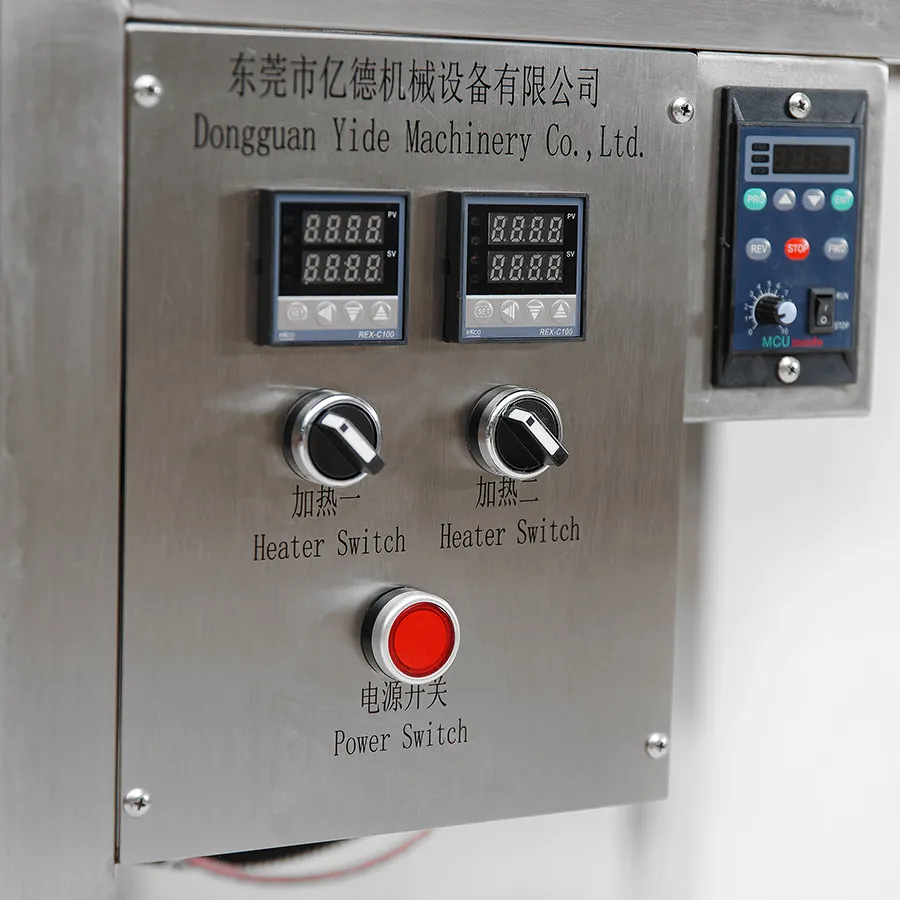
Basic analog dials fail miserably at scale. They lack the granularity required for precision crafting. You must prioritize PID (Proportional-Integral-Derivative) controllers for exact temperature maintenance. A PID controller constantly calculates the difference between your target temperature and current temperature. It then adjusts the power output smoothly. This prevents the aggressive thermal spikes common in cheaper thermostats. A high-quality temperature controlled wax melter always utilizes a calibrated PID system.
Heated Spouts vs. Standard Valves
Many buyers overlook the pouring valve during their evaluation. Unheated ball valves cause immediate headaches. As liquid soy wax travels through a cold brass or stainless valve, it rapidly cools. It then solidifies and clogs the spout completely. You must then use heat guns to clear the blockage, which halts production. Investing in machines featuring internally heated pouring spouts eliminates this frustrating bottleneck entirely.
Material and Build Quality
Never compromise on construction materials. Food-grade 304 or 316 stainless steel remains the industry standard for any professional candle heating tank. Stainless steel provides unmatched corrosion resistance against acidic fragrance oils. Furthermore, it allows for effortless cleaning. You can easily wipe down stainless steel between different fragrance runs. Aluminum or coated tanks degrade quickly and often retain ghost scents from previous batches.
Sizing for Current vs. Future Capacity
Selecting the right size requires careful calculation. You must distinguish between actual operational volume and maximum tank capacity. A 50-liter tank rarely holds 50 liters of usable wax comfortably. You need headspace for mixing and safe pouring. Calculate your daily pouring volume and buy a tank that accommodates 20% more than your current maximum need. This buffer prevents you from under-buying and outgrowing your machinery in six months.
Integrating Wax Mixing Equipment into Soy Candle Production
The Role of Agitation
Simply maintaining the correct temperature is not enough. You must ensure thermal homogeneity throughout the entire vat. Continuous, gentle movement prevents localized hot spots near the heating elements. It also guarantees perfect fragrance and dye dispersion. Without proper agitation, fragrance oils often sink. This leaves the top of your candles scentless while the bottoms become heavily concentrated.
Manual vs. Automated Mixing
You must assess when your production line requires automation. Hand-stirring works for tiny batches, but introduces inconsistencies. Automated systems ensure repeatable results.
Hand Stirring: Prone to operator fatigue. Often results in uneven fragrance distribution in large vats.
Overhead Stirrers: Great for medium batches. They clamp onto the side of smaller tanks and provide steady rotation.
Integrated Tank Agitators: Essential for large-scale operations. These built-in paddles sweep the entire bottom and sides of the tank seamlessly.
Managing Aeration Risks
Aggressive stirring introduces massive problems. Poorly designed wax mixing equipment whips air bubbles directly into the soy wax. These micro-bubbles alter the cooling thermodynamics entirely. They eventually rise to the surface during curing, popping and leaving unsightly craters. You must configure your mixing equipment to run at a low RPM. The goal is gentle folding, not vigorous whipping.
Workflow Synchronization
Your mixing and melting rates must match your pouring speeds. If your heater melts wax slower than you pour, your staff stands around waiting. Conversely, if you melt wax too quickly, it sits at high temperatures for too long, degrading the polymers. Synchronize your equipment capacities. Your primary heating tank should ideally prepare the next batch just as your pouring line finishes the current one.
Implementation Risks and Equipment Troubleshooting
Thermostat Drift
Even commercial sensors degrade over time due to constant heat exposure. Thermostat drift is a documented reality in industrial environments. A machine reading 185°F might actually be heating to 195°F after a year of heavy use. You must implement secondary verification protocols. Always keep a calibrated infrared thermometer or digital probe thermometer nearby. Spot-check the wax surface temperature daily to ensure your equipment sensors remain accurate.
Thermal Shock in Cold Environments
Your equipment might perform flawlessly, but your environment can still ruin the batch. Pumping perfect 185°F wax into a freezing warehouse causes immediate thermal shock. The wax hits the cold glass jars and seizes. This causes severe glass adhesion failures and heavy frosting. To mitigate these ambient risks, you must pre-heat your glass containers. You should also maintain a stable ambient room temperature around 70°F to 75°F during the entire pouring and curing process.
Cleaning and Cross-Contamination
Switching between incompatible fragrance loads requires diligent operational hygiene. Purging soy wax lines and tanks is a demanding reality. You cannot just drain the tank and pour a new scent. Leftover oil alters the flash point and scent throw of the next batch.
Drain the tank completely while the unit remains hot.
Wipe down all internal stainless steel walls using industrial paper towels.
Run a small purge batch of unscented wax through the valve and spout to clear out residual oil.
Use isopropyl alcohol on a clean cloth to finalize the wipe-down before introducing the next fragrance.
Conclusion
Mastering soy wax requires entirely eliminating environmental and operational variables. This mastery starts with precise, repeatable heat generation. Upgrading your workflow from manual methods to industrial equipment guarantees consistent quality and protects your profit margins. When you evaluate new machinery, always prioritize water-jacketed heating systems, accurate PID controllers, and internally heated pouring valves. These features solve the most common production bottlenecks.
We highly recommend auditing your current batch rejection rates immediately. Track exactly how much wax and fragrance you waste due to poor temperature control each month. This simple audit will easily justify the business case for investing in specialized melting infrastructure. Precision machinery is not just a luxury; it is the foundation of a scalable candle business.
FAQ
Q: What is the optimal temperature range to set my soy wax melting machine?
A: Most professionals target 185°F for melting and adding fragrance. This temperature allows the wax polymers to expand and bind fully with fragrance oils. However, always check the specific wax manufacturer specifications, as certain soy blends require slightly lower or higher targets to prevent scorching.
Q: Why is the wax cooling in the spout of my candle heating tank?
A: Ambient heat loss occurs rapidly in unheated brass or stainless steel valves. Since the valve protrudes from the heated tank, the wax inside it solidifies. To solve this, wrap the valve in specialized thermal insulation tape, or upgrade to a machine featuring a built-in heated pouring spout.
Q: Can I leave soy wax heated in a temperature controlled wax melter overnight?
A: We do not recommend leaving wax heated overnight. Prolonged heat exposure causes polymer degradation, rapid discoloration, and ruins the wax structure. It also poses a safety and fire compliance risk. Always power down equipment and let the remaining wax solidify safely until the next shift.
Q: How does wax mixing equipment affect the temperature of the batch?
A: Gentle agitation equalizes the temperature throughout the entire tank, eliminating hot spots. However, if the tank remains uncovered during rigorous mixing, it can pull in cool ambient air, causing rapid heat loss. Always mix at a low RPM with the tank lid secured.