- Home
-
-
How To Choose The Best Wax Melting Machine for Efficient Candle Production
Views: 0 Author: Site Editor Publish Time: 2026-04-30 Origin: Site


Why does your candle production still feel slow even when your formula, fragrance oil, containers, and packaging are ready? In many cases, the problem comes from an unsuitable wax melting machine that causes slow heating, uneven temperature, wax waste, and unstable candle quality.
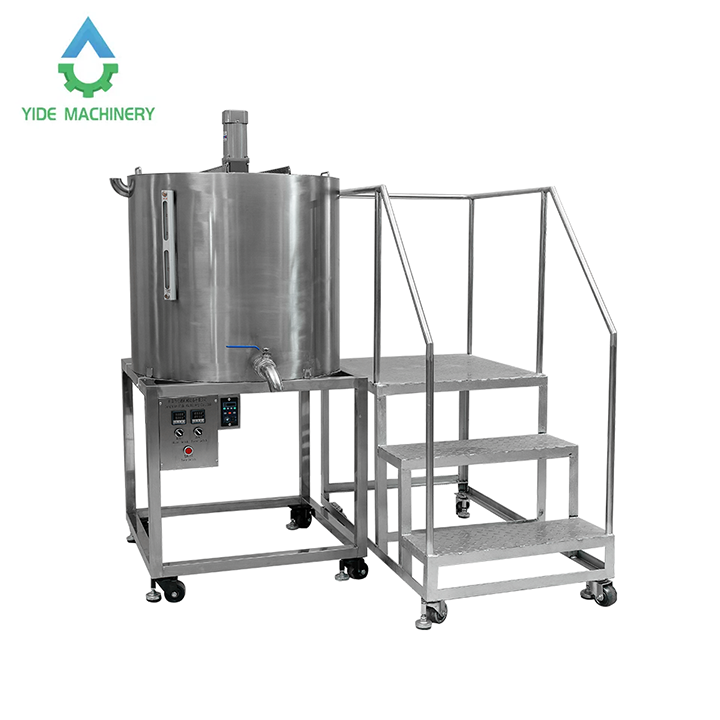
Choosing the best wax melting machine is not just about buying a heating tank. It means selecting equipment that can melt wax efficiently, control temperature accurately, support smooth pouring, and improve batch consistency.
In this post, you’ll learn how to compare capacity, heating method, temperature control, tank material, discharge valve, safety design, cleaning convenience, and supplier support for more efficient candle production.
What Is a wax melting machine?
A wax melting machine is a professional device used to heat and melt solid wax into liquid wax for candle production. It is commonly used for soy wax, paraffin wax, beeswax, coconut wax, palm wax, gel wax, and blended candle wax.
In candle production, the wax melting machine is usually one of the first key pieces of equipment in the workflow. Before fragrance oil, dye, additives, or containers are used, the wax must first be melted to the correct temperature. If this step is slow or unstable, the whole production process becomes less efficient.
Compared with manual heating pots, a wax melting machine provides better temperature control, larger capacity, safer operation, and more stable wax output. This is especially important for businesses that need repeatable candle quality across many batches.
A typical wax melting machine may include:
● Stainless steel melting tank
● Electric heating system
● Temperature controller
● Outlet valve
● Insulation layer
● Control panel
● Safety protection system
● Optional mixer or agitator
The main purpose of a wax melting machine is simple: melt wax efficiently and keep it at the right temperature for candle production.
Why Choosing the Right wax melting machine Matters
Choosing the wrong wax melting machine can create problems in every stage of candle production. If the machine is too small, workers need to melt wax again and again. If the heating is too slow, production time increases. If the temperature control is inaccurate, wax quality and fragrance performance may be affected.
A suitable wax melting machine can help candle producers:
● Melt wax faster
● Maintain stable wax temperature
● Reduce manual heating work
● Improve batch consistency
● Support larger candle orders
● Reduce wax waste
● Improve pouring efficiency
● Lower production downtime
● Make daily operation safer and easier
For small candle studios, the right wax melting machine helps improve daily production speed. For growing candle brands, it supports larger batches and more stable quality. For commercial candle factories, it can become part of a more efficient production line.
The best wax melting machine should match your candle production scale, wax type, batch size, heating requirement, and working process.
1. Choose the Right Capacity
Capacity is one of the most important factors when choosing a wax melting machine. If the machine capacity is too small, production will be interrupted frequently. If it is too large, it may waste energy and take up unnecessary space.
Before selecting a wax melting machine, calculate how much wax you use per batch and per day. For example, if each candle uses 200 grams of wax and you produce 500 candles per day, you need about 100 kg of wax daily. In this case, a very small wax melting machine will not be efficient enough.
You should also consider your future production growth. If your candle business is expanding, it is better to choose a wax melting machine that can support higher output instead of only meeting your current minimum demand.
Production Scale
Suggested Capacity
Suitable User
Main Selection Focus
Small handmade production
10L–30L
Home studios, small candle shops
Easy operation and cleaning
Small business production
30L–100L
Growing candle brands
Stable heating and larger batch output
Commercial production
100L–300L
Candle workshops and private-label suppliers
Faster melting and durable structure
Industrial production
300L+
Large candle factories
Custom capacity and production line integration
When choosing capacity, do not only look at the tank volume. You should also consider melting time, heating power, available workshop space, operator workflow, and how often the machine needs to be refilled.
For efficient candle production, the right wax melting machine should allow you to prepare enough melted wax without slowing down the next production step.
2. Check Heating Speed and Heating Efficiency
Heating speed directly affects production efficiency. A wax melting machine that takes too long to melt wax can become a bottleneck, especially during large orders or seasonal production peaks.
However, faster heating does not always mean better performance. The best wax melting machine should heat wax quickly and evenly without burning or damaging the wax. Uneven heating may cause hot spots, which can affect wax color, fragrance performance, and final candle appearance.
Common heating methods include:
● Direct electric heating
● Water-jacketed heating
● Oil-jacketed heating
● Steam-assisted heating
For small and medium candle production, an electric wax melting machine is often practical and easy to use. For larger commercial production, a jacketed wax melting machine may provide more even heat distribution and better temperature stability.
Heating Method
Advantages
Limitations
Suitable Application
Direct electric heating
Simple, cost-effective, easy to operate
Requires good temperature control
Small to medium candle production
Water-jacketed heating
Gentle and even heating
Limited high-temperature range
Soy wax and delicate wax blends
Oil-jacketed heating
Stable heat transfer, suitable for larger tanks
Higher equipment cost
Commercial candle production
Steam heating
Efficient for large production
Requires steam system
Industrial candle factories
When comparing machines, ask the supplier about melting time, heating power, insulation performance, and heat distribution. A good wax melting machine should save time while protecting wax quality.
3. Look for Accurate Temperature Control
Temperature control is a key feature of any professional wax melting machine. Different waxes need different melting and pouring temperatures. If the temperature is too high, the wax may be overheated. If it is too low, the wax may not mix well with fragrance oil or dye.
Accurate temperature control helps improve:
● Wax melting consistency
● Fragrance oil mixing
● Color dispersion
● Pouring performance
● Surface appearance
● Batch-to-batch stability
For example, soy wax often requires careful temperature control to reduce surface defects and improve appearance. Paraffin wax may tolerate higher temperatures, but it still needs stable heating for consistent candle quality.
A reliable wax melting machine should have an adjustable temperature controller, clear temperature display, automatic heating control, and over-temperature protection. Digital temperature control is especially useful for professional candle production because it helps operators repeat the same process more easily.
If your business produces different candle types, fragrances, or wax blends, temperature accuracy becomes even more important. The wax melting machine should help you control the process, not create more uncertainty.
4. Choose Durable Tank Material
The tank material affects the durability, cleanliness, and service life of the wax melting machine. Stainless steel is commonly used because it is strong, corrosion-resistant, and easy to clean.
For candle production, the inner surface of the wax melting machine should be smooth. A smooth tank helps reduce wax residue, fragrance contamination, and color mixing between batches. This is especially important if you produce many candle scents or colors.
When checking tank quality, pay attention to:
● Stainless steel grade
● Tank thickness
● Welding quality
● Inner wall polishing
● Corrosion resistance
● Overall machine structure
● Stability of the frame
A low-quality wax melting machine may look acceptable at first, but long-term heating, cleaning, and repeated operation can expose problems such as deformation, leakage, poor insulation, or difficult maintenance.
If you are producing candles commercially, it is better to choose a wax melting machine with a durable tank and reliable build quality. A stronger machine can reduce downtime and replacement costs.
5. Evaluate the Outlet Valve and Discharge Design
The outlet valve is a small part of the wax melting machine, but it has a big effect on production efficiency. After wax is melted, it needs to be discharged smoothly into pouring pitchers, mixing containers, filling machines, or candle containers.
A poor outlet design can cause leakage, blockage, slow flow, and wax waste. This can make production messy and inefficient.
When choosing a wax melting machine, check the discharge design carefully. Important points include:
● Valve position
● Valve size
● Wax flow speed
● Anti-leak structure
● Heat-resistant sealing
● Easy cleaning design
● Compatibility with filling equipment
For small candle production, a simple manual valve may be enough. For larger production, the wax melting machine may need a bigger outlet or connection to a filling system.
A good discharge design helps reduce leftover wax inside the tank. Less leftover wax means less waste, easier cleaning, and better material use. This is important when using expensive wax, fragrance oil, or custom color formulas.
6. Consider Safety Features
A wax melting machine uses heat and electricity, so safety should always be considered before purchase. A machine without proper safety design can create risks for operators and production areas.
Important safety features include:
● Overheat protection
● Temperature limiter
● Stable support structure
● Insulated tank wall
● Safe electrical wiring
● Grounding protection
● Heat-resistant handles
● Emergency stop button for larger machines
● Clear control panel
For commercial candle workshops, operators may use the wax melting machine for several hours each day. The machine should be stable, safe, and easy to control. It should not require constant manual monitoring to prevent overheating.
Before buying, confirm the voltage, power, electrical components, and safety standards with the supplier. If the wax melting machine will be used in a professional production environment, safety and reliability are more important than a low price.
7. Check Cleaning and Maintenance Convenience
Cleaning is an important part of candle production. A wax melting machine that is difficult to clean can slow down production, especially when switching between different fragrances, colors, or wax types.
Wax residue may remain inside the tank, around the valve, or near the heating area. If old wax mixes with a new batch, it may affect scent, color, and final candle quality.
A good wax melting machine should be designed for easy cleaning. Useful features include:
● Smooth inner tank
● Wide opening
● Easy-access outlet valve
● Removable or cleanable parts
● Minimal dead corners
● Simple maintenance structure
Maintenance is also important. Heating elements, sensors, valves, seals, and electrical parts should be easy to inspect or replace. Before purchasing a wax melting machine, ask whether the supplier provides spare parts and technical support.
For efficient candle production, the machine should not only melt wax well but also reduce cleaning time and maintenance downtime.
8. Match the Machine with Your Production Workflow
The best wax melting machine is the one that fits your actual candle production process. Before buying, think about how wax moves through your workflow.
A typical candle production process includes:
1. Preparing wax
2. Melting wax
3. Holding wax at the correct temperature
4. Adding fragrance oil and color
5. Mixing
6. Pouring or filling
7. Cooling
8. Packaging
The wax melting machine should support this process smoothly. If your workers need to carry heavy containers across the workshop, production efficiency will be reduced. If the outlet position does not match your filling setup, the machine may be inconvenient to use.
For handmade candle studios, a compact wax melting machine may be best. For private-label candle brands, a medium-capacity wax melting machine with stable temperature control may be more suitable. For factories, a larger wax melting machine may need to connect with mixers, pumps, or filling machines.
Always choose the machine based on real production use, not only based on appearance or price.
9. Compare Price with Long-Term Value
Price is important, but it should not be the only deciding factor. A low-cost wax melting machine may save money at the beginning, but it may cost more later if it melts slowly, breaks often, wastes wax, or requires frequent repair.
When comparing different machines, consider total value:
● Purchase price
● Heating efficiency
● Energy consumption
● Labor savings
● Wax waste reduction
● Maintenance cost
● Machine lifespan
● Production stability
● Supplier support
A higher-quality wax melting machine can often provide better long-term value because it supports faster production, more stable quality, and fewer interruptions.
For candle businesses, production efficiency directly affects profit. If a better wax melting machine helps produce more candles per day with less labor and less waste, the return on investment can be much higher than choosing the cheapest option.
10. Choose a Reliable wax melting machine Manufacturer
The supplier you choose matters. A professional wax melting machine manufacturer can help you select the right model based on your production volume, wax type, heating needs, and workshop layout.
When choosing a supplier, check:
● Manufacturing experience
● Machine customization ability
● Material quality
● Quality control process
● Technical support
● Spare parts availability
● Communication efficiency
● After-sales service
Useful questions to ask the manufacturer include:
● What capacity do you recommend for my daily candle production?
● What wax types can this wax melting machine handle?
● What heating method does the machine use?
● How accurate is the temperature control?
● What stainless steel material is used?
● Can the outlet valve be customized?
● Can the machine connect with a filling machine?
● What voltage options are available?
● What safety features are included?
● Do you provide spare parts and technical support?
A reliable manufacturer should be able to answer these questions clearly. If the supplier only focuses on price and cannot explain technical details, you should be cautious.
11. Practical Checklist Before Buying
Before ordering a wax melting machine, use this checklist to make sure the machine fits your candle production needs:
● Confirm your daily wax consumption
● Choose a suitable tank capacity
● Match the heating method with your wax type
● Check melting speed and heating efficiency
● Confirm temperature control accuracy
● Check stainless steel tank quality
● Review outlet valve design
● Confirm safety protection
● Check cleaning convenience
● Confirm voltage and power requirements
● Ask about customization options
● Confirm spare parts and after-sales support
● Make sure the machine fits your production workflow
This checklist helps you avoid choosing a wax melting machine based only on price. The goal is to buy equipment that improves production efficiency, supports consistent candle quality, and fits long-term business growth.
Conclusion
Choosing the best wax melting machine means selecting equipment that fits your capacity, wax type, heating speed, temperature control, safety needs, and production workflow. A suitable machine can help improve melting efficiency, reduce labor, minimize wax waste, and keep candle quality more consistent.
For reliable and customized wax melting machine solutions, Dongguan Yide Machinery Co., Ltd. can support small studios, growing candle brands, and commercial candle manufacturers with professional equipment and production guidance.
FAQs
1. What size wax melting machine do I need for candle production?
The right size depends on your daily candle output, wax consumption, and batch size. Small candle studios may use a 10L–30L wax melting machine, while commercial candle producers may need 100L–300L or larger customized equipment.
2. Can a wax melting machine be used for soy wax?
Yes. A wax melting machine can be used for soy wax, paraffin wax, beeswax, coconut wax, palm wax, and blended wax. The key is to choose a machine with accurate temperature control.
3. Why is temperature control important in a wax melting machine?
Temperature control helps prevent overheating, supports better fragrance mixing, improves color consistency, and keeps candle quality stable from batch to batch.
4. Is stainless steel good for a wax melting machine?
Yes. Stainless steel is a common and reliable material for a wax melting machine because it is durable, corrosion-resistant, easy to clean, and suitable for long-term candle production.
5. Can a wax melting machine be customized?
Yes. A professional manufacturer can customize a wax melting machine based on capacity, voltage, heating method, tank design, outlet valve, mixing function, and production workflow.