Views: 0 Author: Site Editor Publish Time: 2026-11-08 Origin: Site


Candle combustion is a delicate science relying on the precise interaction between heat, fuel, and oxygen. When you light a wick, it creates a melt pool that must expand evenly to consume the wax effectively. A perfectly centered wick ensures this symmetry, allowing the flame to draw fuel from all directions at a consistent rate. However, even slight deviations from the center trigger significant performance issues. Off-center wicks often lead to uneven melting, commonly known as tunneling, where only the wax near the wick melts. This leaves hard, unused wax along the container walls and forces the flame to reach deep into the jar, causing glass overheating and potential safety hazards. As production grows, manual alignment becomes unreliable, leading to inconsistent quality and wasted materials. Transitioning to an Automatic Wick Inserting Machine helps manufacturers achieve the geometric precision required for professional, safe, and efficient candle production.
Safety First: Misaligned wicks are a leading cause of container breakage due to concentrated heat zones.
Efficiency Gains: Proper centering prevents "tunneling," ensuring all wax is consumed and maximizing burn time.
Quality Control: Manual methods often fail under high-volume production; standardized alignment is non-negotiable for brand consistency.
Scaling Strategy: Investing in an automatic wick inserting machine is the pivot point from hobbyist craft to scalable, commercial manufacturing.
Burn stability relies on thermodynamics and fluid dynamics within the candle jar. A centered wick produces a symmetrical melt pool because the heat radiates outward equally in all directions. When the wick is perfectly positioned, the wax liquefies uniformly until it reaches the edges of the container. This uniform melt pool prevents the wax from "hanging up" on the sides, which is the hallmark of a high-quality product. Conversely, an off-center wick causes the flame to drift closer to one side of the glass. This concentrated heat creates a hot spot that may exceed the thermal threshold of the glass. Over time, this leads to thermal shock, which can cause jars to crack or shatter during use. Furthermore, an off-center flame produces uneven fragrance throw. Since the melt pool reaches the edge on one side while struggling on the other, the fragrance oil release becomes erratic. Consistent alignment is not just a cosmetic detail; it is a vital metric for maintaining brand reputation and ensuring that every customer experiences the full potential of your product.
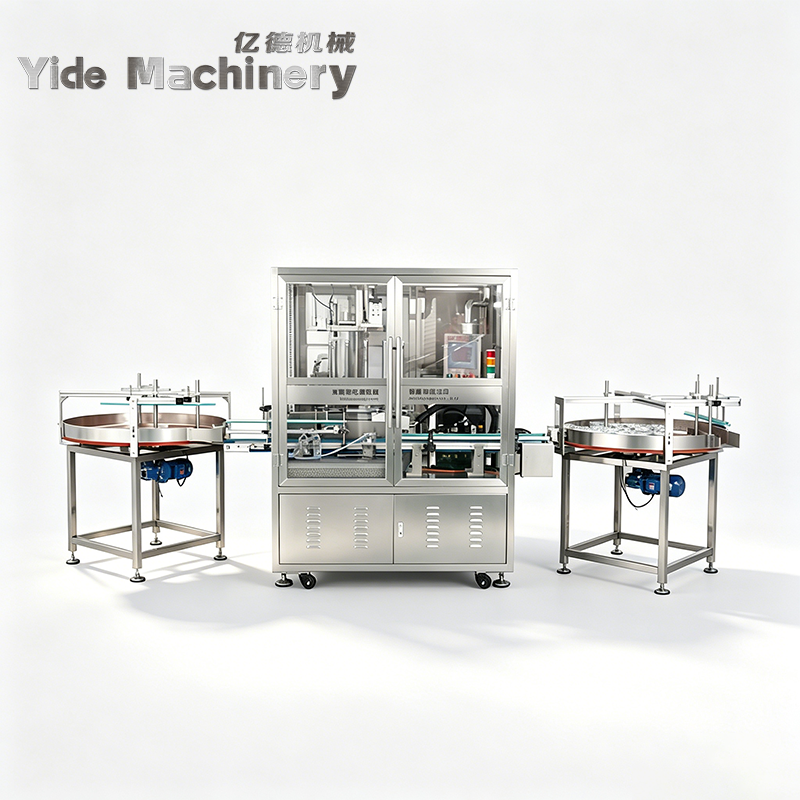
Small-batch makers often rely on wooden sticks, clips, or adhesive stickers to hold wicks in place. These tools work well for home hobbyists but present severe limitations during high-volume manufacturing. Manual application introduces human error, as eye-balling the center leads to inevitable variations across a production run. Additionally, the labor-intensive nature of manual centering increases the cost-per-unit significantly as your output scales. Mechanical automation provides the only viable path to total consistency. An Automatic Wick Inserting Machine removes the physical fatigue and variability inherent in hand-placement. By using advanced sensors and precise mechanical guides, these machines guarantee that every wick sits exactly where it belongs.
Method | Consistency | Labor Requirements | Suitable Volume |
|---|---|---|---|
Manual Alignment | Low/Variable | High | Small / Hobbyist |
Semi-Auto Inserter | Moderate | Medium | Growing Business |
Automatic Inserter | Very High | Low | Industrial / Scale |
When you evaluate your ROI, consider the cost of re-processing defective candles. If your rejection rate climbs due to poor centering, the investment in a dedicated Wick Centering Machine pays for itself rapidly through reduced waste and improved throughput.
Selecting the right hardware is a critical decision for your production line. You must prioritize precision and tolerances, as even a two-millimeter shift can alter the burn performance of a luxury candle. Look for a Wick Inserting Machine that offers adjustable centering parameters to accommodate different glass diameters. Flexibility remains key. Your production line might switch between votives, standard jars, and larger vessels. A versatile Jar Candle Wick Inserter should feature quick-change tooling to minimize downtime during product changeovers. You should also evaluate the integration capabilities of the machine. Can it slot into your existing conveyor system, or does it require a completely redesigned floor layout? Finally, consider the maintenance schedule. Industrial equipment requires regular calibration to remain accurate over thousands of cycles. Choose a manufacturer that provides clear service protocols and accessible support, ensuring your Wick Centering Machine stays operational during peak production seasons.
Moving to automation changes your entire workflow. You must shift from "artisan intuition" to standardized process documentation. When you install an automatic wick inserting machine, develop strict calibration protocols to ensure the equipment remains accurate. Train your staff not just on operation, but on recognizing signs of misalignment, such as slight drift or inconsistent adhesive application. Scaling often brings "growing pains," such as supply chain issues or machine integration hurdles. You can mitigate these by:
Standardizing jar sourcing to ensure consistent internal dimensions.
Implementing a quality check gate immediately after the insertion step.
Performing daily maintenance checks to prevent mechanical wear.
The long-term result of this transition is a drastic reduction in "seconds" or defective inventory. By relying on a repeatable mechanical process, you protect your brand's quality standards while increasing your capacity to meet market demand.
Achieving perfect wick alignment is the difference between a high-quality product and a potential safety hazard. While manual methods serve the needs of small-batch crafters, scaling your business requires the mechanical precision that only a dedicated Wick Inserting Machine can provide. This technology is not merely an expense; it is a foundational asset for ensuring product safety, consistent burn performance, and operational efficiency. If your current rejection rate exceeds your brand's tolerance, the time has come to invest in a professional jar candle wick inserter to secure your future growth.
A: Visual centering is often deceptive. A wick may look centered to the naked eye but remain geometrically offset. Even a minor deviation shifts the heat balance, preventing the melt pool from reaching the vessel walls on the colder side. This leads to tunneling despite a "close enough" appearance.
A: Yes, most professional inserters are designed for versatility. Industrial models typically feature interchangeable clamping or insertion tools that can be swapped to accommodate various wick diameters, materials, and rigidity profiles, ensuring a secure fit regardless of the wick type.
A: Consider upgrading when manual centering becomes a bottleneck that limits your output or leads to excessive rework costs. If you find that the labor hours spent on manual alignment and the loss from scrapped, misaligned candles exceed the amortized cost of an Automatic Wick Inserting Machine, it is time to automate.
A: The most common failure involves improper calibration or debris accumulation in the guide mechanisms. Regular maintenance, including cleaning the insertion head and verifying alignment sensors against a master sample, ensures the Wick Centering Machine continues to deliver perfect results shift after shift.