Views: 0 Author: Site Editor Publish Time: 2026-11-09 Origin: Site


Candle making balances ancient craft and precise thermal engineering. Modern candle brands can no longer rely on hand-dipped guesswork when consumer expectations demand immaculate burns. A high-efficiency Wick Dipping Machine replaces erratic manual labor by delivering precise wax saturation across thousands of linear feet. This transition defines the modern candle factory.
Raw braided wicks hold trapped air and uneven fibers. When you prime a wick, you replace air pockets with stabilized wax. This priming ensures fast ignition, sustains capillary fuel delivery, and curbs unwanted carbon buildup. Without consistent priming, even luxury wax blends burn poorly, flicker violently, or drown in early melt pools.
You need to understand how industrial wax coating affects burn physics and factory output. This guide breaks down the science of capillary action and automated wax priming. We will explore machine features, factory integration, and real-world quality control protocols to help you master production scale.
Consistency: Automated systems ensure uniform wax saturation, eliminating the "human error" inherent in manual dipping.
Combustion Physics: Properly primed wicks regulate fuel flow, resulting in cleaner, soot-free burns and reliable flame height.
Scalability: Moving from manual immersion to an automatic wick dipping machine is a critical inflection point for scaling production without sacrificing quality control.
Material Compatibility: Understanding the synergy between wick types (cotton, paper-core, wood) and wax blends is essential for optimizing machine settings.
A candle functions as a thermodynamic fluid pump. The flame melts the wax surface, creating a small liquid pool. Capillary pressure then pulls this liquid upward through braided strands. A properly processed Wax-Coated Candle Wick acts as an instant capillary bridge. It allows liquid fuel to travel upward immediately after match contact. If raw cotton fibers remain dry inside, the flame consumes the wick material before drawing liquid wax, causing premature burn-off.
Flame stabilization during early ignition depends directly on this outer wax jacket. When someone lights a candle, the exterior coating burns first. It supplies fuel for roughly fifteen to thirty seconds. This brief window gives the flame time to melt the upper candle pool. The flame maintains steady height, resists air drafts, and establishes a round melt ring. Wicks without dense priming flutter weakly, smoke heavily, and curl unevenly.
Poor wax immersion causes three primary burn failures:
Tunneling: Under-primed wicks produce weak flames. They lack heat to reach jar edges, boring a deep hole down the container center.
Drown-Outs: Uneven wax coats leave internal dry voids. The flame starves, shrinks, and drowns in its own rising melt pool.
Carbon Mushrooming: Air pockets cause erratic capillary suction. Surges of unvaporized fuel reach the flame tip, creating carbon blossoms and black smoke.
Industrial testing frameworks like ASTM F2417 hold manufacturers to strict fire safety standards. Precise wax encasement ensures wicks stay upright during combustion. It keeps flame heights predictable and preserves clean burn profiles from top to bottom.
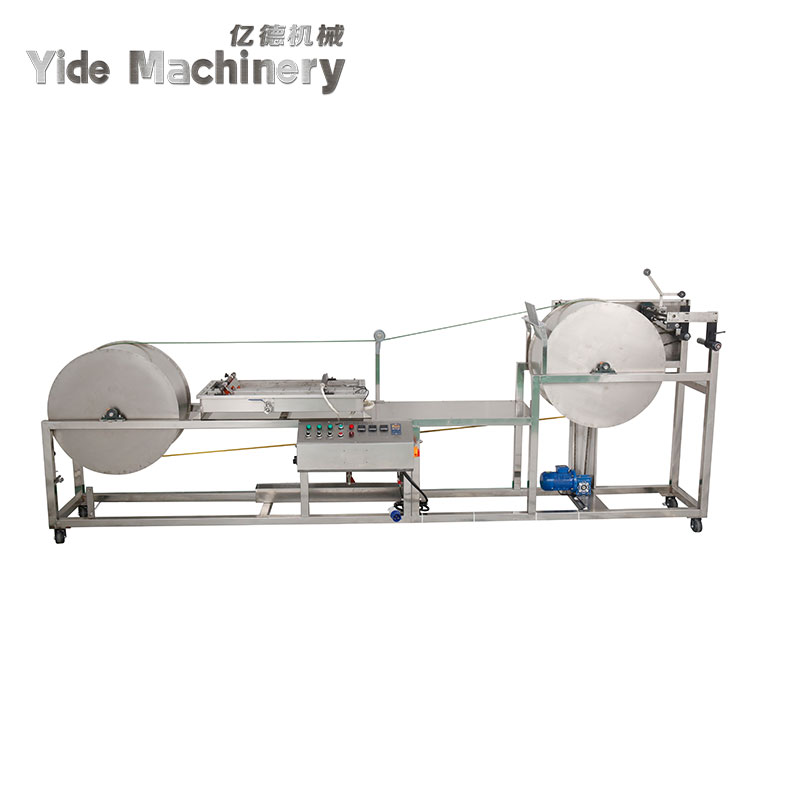
Artisanal dipping relies on manual dip pans, wire frames, and ambient drying racks. Operators lower coiled wicks into hot wax, lift them out, and hand-straighten strands. Human hands cannot maintain identical dipping speeds or bath times. One batch dries too thick; another retains hidden internal air pockets. Continuous-run Wick Coating Equipment eliminates manual variance. It feeds raw braided spooling into heated troughs at measured rates.
Advanced equipment relies on precise operational variables:
Immersion Duration: Motorized drive rollers regulate transit time through the liquid bath. Fibers achieve deep core saturation without thermal shock.
Thermal Profiles: Multi-zone heaters keep wax at exact target temperatures. This stops premature skin formation or excessive dripping.
Calibrated Die Orifices: Sizing dies scrape away excess wax. They leave a smooth, concentric outer diameter on every single inch.
Active Chilling Channels: Chilled water jackets or forced-air cooling towers set the wax rapidly. This prevents oval deformation on take-up spools.
Automation cuts floor space requirements and minimizes messy scrap. Raw wick passes cleanly into wax baths and emerges dry onto rewind reels. Workers avoid handling molten waxes, which boosts shop safety and reduces physical strain.
The table below highlights performance metrics between traditional hand dipping and automated processing lines.
Table 1: Operational Comparison of Priming Methods
Parameter | Manual Batch Dipping | Continuous Automated System |
|---|---|---|
Daily Throughput | 200 – 600 linear feet/operator | 5,000 – 25,000+ linear feet/shift |
Coating Diameter Variance | ± 0.45 mm to 0.80 mm | ± 0.05 mm to 0.08 mm |
Core Penetration Depth | Inconsistent; leaves trapped dry pockets | 100% complete core saturation |
Wax Waste & Drippage | High scrap rate (12% – 18%) | Near-zero closed-loop recovery (< 2%) |
Labor Allocation | Requires constant active manipulation | Single-operator monitoring and spool changes |
Choosing an industrial priming system demands careful assessment of mechanical components. A durable frame matters, but fluid dynamics and temperature control dictate your end product quality. Below, we break down vital design components.
Thermostatic precision serves as the foundation of reliable coating. Paraffin, soy blends, beeswax, and microcrystalline formulas exhibit vastly different viscosities across slight thermal shifts. If your wax bath cools by just five degrees, wax thickens. It applies too heavily, jamming downstream assembly cutters. If it runs too hot, the wax runs off like water, leaving outer strands starved. High-end machines utilize proportional-integral-derivative (PID) digital controllers and jacketed oil reservoirs. They distribute heat evenly and eliminate scorched hot spots.
Your machine speed must balance internal saturation against output targets. Running braided cotton too fast pulls strands through before wax displaces internal air. Look for variable-speed drive motors capable of smooth transitions between 15 and 80 feet per minute. Digital readouts help operators log exact speeds for specific yarn densities.
Modern candle makers rarely use a single wick type. Your line might process flat braided cotton, round paper-core, spun hemp, or planar wooden ribbons. The machinery must offer interchangeable tension guides and adjustable die apertures. Changing formulations from high-tack soy to stiff microcrystalline wax should take minutes, not hours.
Heating large open wax volumes carries distinct safety risks. Industrial equipment must incorporate dual high-limit cutoff switches to prevent thermal runaway. Fume extraction hoods draw hydrocarbon vapors away from operators. Stainless steel drip pans capture spills, keeping factory floors safe and compliant with occupational safety standards.
Table 2: Material and Machine Setting Compatibility Matrix
Wick Substrate | Recommended Wax Blend | Bath Temperature | Die Clearance |
|---|---|---|---|
Flat Braid Cotton | High-Melt Paraffin (145°F+) | 165°F – 175°F | Tight (+0.10 mm) |
Paper-Core Braid | Semi-Refined Microcrystalline | 155°F – 165°F | Standard (+0.15 mm) |
Wood Ribbon / Slat | Soy / Vegetable Blend | 150°F – 160°F | Wide (+0.25 mm) |
Round Spun Hemp | Natural Filtered Beeswax | 170°F – 180°F | Medium (+0.12 mm) |
Installing an Automatic Wick Dipping Machine changes your shop floor layout and maintenance routine. Many factories experience initial snags because they treat continuous wax machinery like simple mechanical rollers. You must respect fluid dynamics, mechanical tension, and wax chemistry to maintain high yields.
Tension control presents the primary calibration hurdle. If feed reels brake too hard, the machine stretches hot, wax-soaked braids. Once coiled onto take-up reels, the elastic fibers snap back. This compression breaks the brittle wax shell, causing spalling and flaking during wick clipping. You must balance dancer arms and magnetic tensioners so fibers glide freely without slack.
Wax bath contamination also ruins daily runs. Braided cotton sheds micro-lint. Over days of operation, this lint accumulates inside tanks and clogs wiping nozzles. The resulting friction causes streaks along the wick surface. Successful operators follow strict cleaning protocols:
Wipe guiding eyelets and scraper dies with brass tools every shift.
Drain wax baths through wire-mesh strainers weekly to catch fibers.
Flush chilling lines monthly to eliminate mineral scale and maintain cooling rates.
Inspect heating elements for carbon crusting to preserve uniform heat transfer.
Quality assurance requires clear testing metrics rather than visual checks. Implement a three-step validation procedure for every production run:
Cut-and-Weigh Testing: Cut ten sample segments measuring exact one-foot lengths. Weigh them on an analytical scale to verify coat weight against your master target.
Cross-Section Inspection: Snip samples using a razor-sharp blade. View the core under magnification to ensure zero dry fiber pockets remain.
Bend-Recovery Evaluation: Bend the coated wick ninety degrees at room temperature. The wax jacket must flex without flaking off in chunks.
Deciding when to switch from pre-tabbed supplier wicks to in-house dipping depends on production volume. Pre-waxed wicks carry substantial supplier markups. They also lock your factory into fixed wax formulations that may not pair cleanly with your proprietary candle blends. When your brand consumes over fifty thousand feet of wick monthly, running your own coating line becomes practical.
In-house priming removes critical supply chain bottlenecks. If customer trends suddenly shift toward braided linen or paper-core wicks, you do not have to wait weeks for overseas deliveries. You purchase raw spools, set your bath parameters, and coat precisely what you need. This agility keeps your finished goods inventory lean and responsive.
The downstream benefits directly impact brand reputation. Inconsistent wicks generate high warranty returns and negative retail reviews. When candles fail to light or burn holes down container centers, consumers blame your brand, not the component supplier. By controlling wick priming in-house, you control flame geometry, soot emission, and pool diameter. The investment pays dividends through fewer defect claims and greater production flexibility.
A flawless candle burn requires sound capillary physics. While wax formulations and fragrance loads receive immense attention, the primed wick delivers the fuel that powers combustion. Mechanical precision during wax application ensures predictable flame height, prevents soot buildup, and eliminates drowning.
Transitioning to continuous coating equipment delivers tangible production benefits:
It secures absolute coat concentricity and eliminates dry fiber pockets.
It reduces reliance on costly manual labor and cuts scrap rates.
It provides immediate flexibility to process custom wick and wax combinations.
It ensures uniform flame performance across entire consumer product lines.
To scale your production smoothly, evaluate your weekly spool consumption and identify current burn defects. Select machinery that offers tight digital thermal controls, adaptable die heads, and rugged industrial safety features tailored to your factory space.
A: A wick dipper is a small consumer hand tool used to bend burning wicks into melted wax pools to extinguish flames without smoke. A wick dipping machine is industrial manufacturing equipment designed to coat and saturate thousands of feet of raw wick fiber with hot wax during candle production.
A: No. Heavy cotton wicks require thin, penetrating wax coats to avoid clogging tight braids. Conversely, paper-core or porous linen strands need heavier coatings to maintain rigidity during candle pouring. Machine dies must be adjusted according to fiber construction, wax viscosity, and container size.
A: Mushrooming occurs when erratic fuel delivery sends unburned carbon to the flame tip. Automated machines ensure complete, void-free wax saturation along the entire wick core. This creates consistent capillary action, delivers balanced fuel volumes, and eliminates combustion surges that generate carbon deposits.
A: Most single-bath industrial machines process one wick type per run because different fibers require specific tension settings, bath dwell times, and die diameters. However, multi-spool lines can process multiple strands of the same material simultaneously through shared wax tanks.
A: Key safety priorities include secondary thermal cutoffs to prevent wax flash fires, local exhaust ventilation to remove airborne wax fumes, insulated tank walls to protect operators from burns, and emergency stop switches near motorized pull rollers.